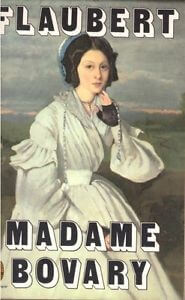
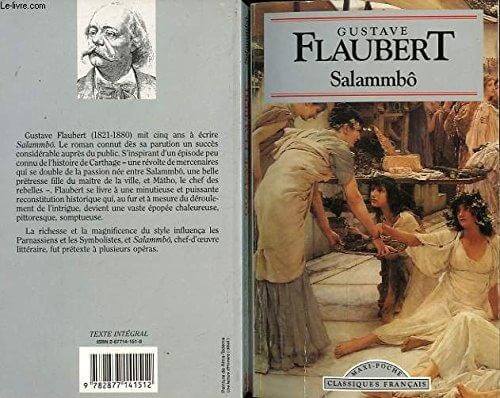
Madame Bovary
Madame Bovary is the debut novel of French writer Gustave Flaubert, published in 1856. The character lives beyond her means in order to
escape the banalities and emptiness of provincial life.
Madame Bovary is the debut novel of French writer Gustave Flaubert, published in 1856. The character lives beyond her means in order to
escape the banalities and emptiness of provincial life.
"Cher Mathieu, cher Thomas,
Quand vous étiez petits, j'ai eu quelquefois la tentation, à Noël, de vous offrir un livre, un Tintin par exemple. On aurait pu en parler
ensemble après. Je connais bien Tintin, je les ai lus tous plusieurs fois. Je ne l'ai jamais fait. Ce n'était pas la peine, vous ne saviez
pas lire. Vous ne saurez jamais lire. Jusqu'à la fin, vos cadeaux de Noël seront des cubes ou des petites voitures..."
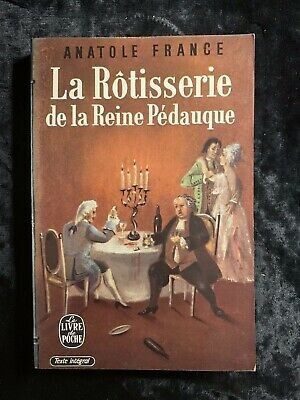
This book follows young Jacques, the son of a meat seller, who at the age of six was put to work turning a spit from dawn to dusk, replacing their aging dog who had been doing the job. While turning the spit he was given a book on his lap from which to study. Later, a monk was so impressed with Jacques that he took him on to be tutored. From there the story progressed in a hilarious way( in particular whenever the subject referred to Salamanders)
When controversial radio talk host John Truth broadcasts a terrorist threat of a man-made earthquake, few people take it seriously. Crackerjack young FBI agent Judy Maddox is assigned to track down the elusive, sinister group called the "Hammer of Eden."Judy's boss, who has a grudge against her, thinks he has given her a waste-of-time assignment. But Judy's research leads her to maverick seismologist Michael Quercus, who gives her the shocking news that it might just be possible for an earthquake to be deliberately triggered. And when a tremor in a remote California desert shows evidence of being machine-generated, Judy knows the threat is terrifyingly real.
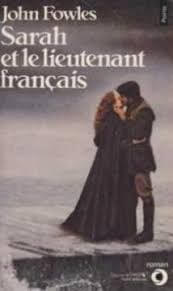
The scene is the village of Lyme Regis on Dorset's Lyme Bay..."the largest bite from the underside of England's out-stretched southwestern leg." The major characters in the love-intrigue triangle are Charles Smithson, 32, a gentleman of independent means & vaguely scientific bent; his fiancée, Ernestina Freeman, a pretty heiress daughter of a wealthy & pompous dry goods merchant; & Sarah Woodruff, mysterious & fascinating...deserted after a brief affair with a French naval officer a short time before the story begins. Obsessed with an irresistible fascination for the enigmatic Sarah, Charles is hurtled by a moment of consummated lust to the brink of the existential void. Duty dictates that his engagement to Tina must be broken as he goes forth once again to seek the woman who has captured his Victorian soul & gentleman's heart.
The book is three stories from Pierre Noziere. The first is about neighbours he used to visit when he was little. A woman in white who was married to a man in China, that he didn't like, and how he pretended to be her "little husband" and met her years later at a ball. The second confused me a bit as it kept referencing the sons of Edward and I had to explain that they meant the Princes in the tower who were killed. The third was about the death of his grandmother and visiting her at the funeral home. It was the easiest of the three stories. But then perhaps I'm just more used to death... They were nice stories and the little book was a good study aid. I've got a couple more in the same series and am looking forward to reading them
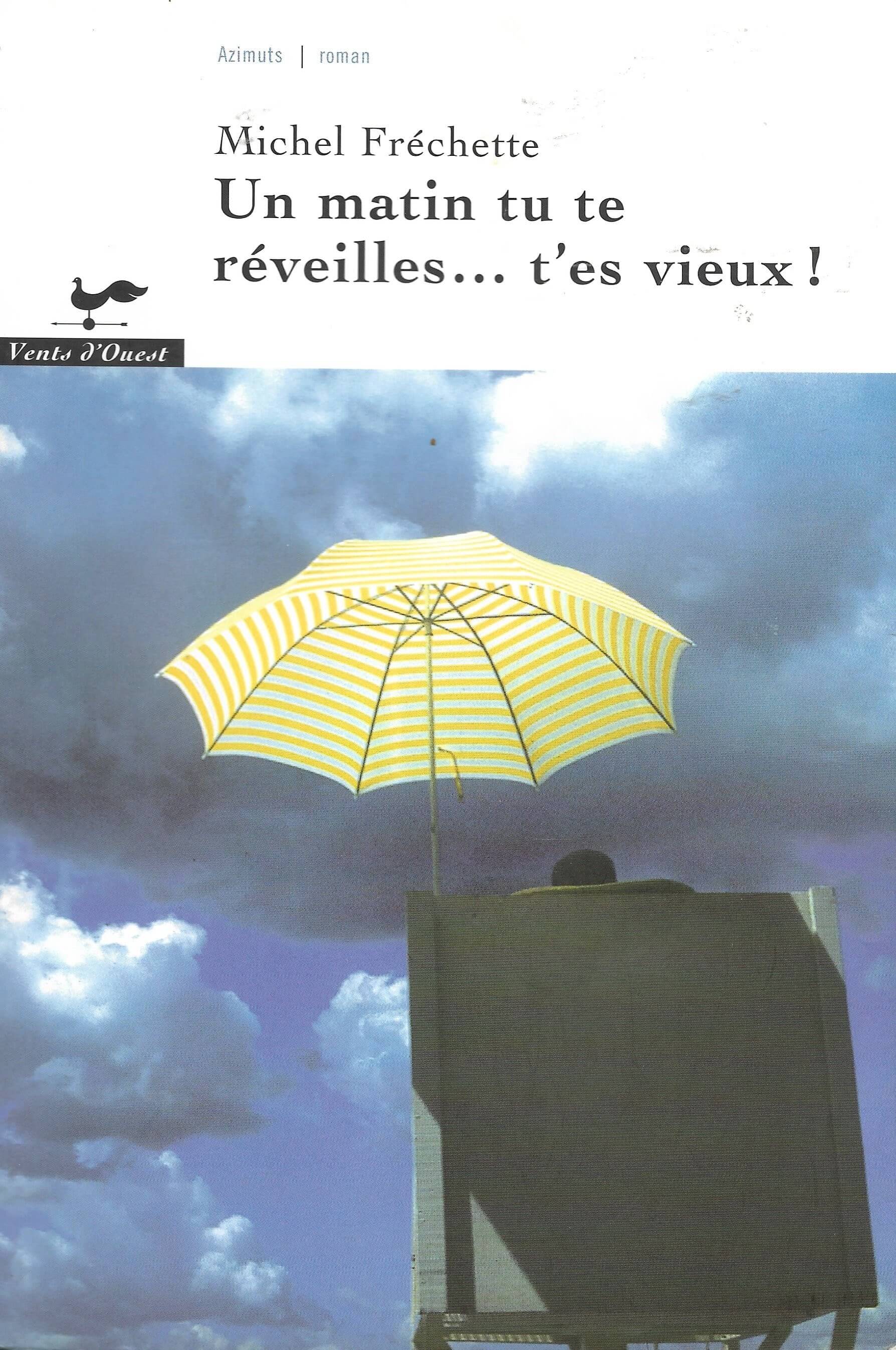
This novel is the record of the daily experiences of a man approaching old age. It delves into the essential but hidden nature of his
daily life, employing prose that is relentless in its re-creation of detail. Each scene is recorded in such minuteness that the novel
sometimes leaves the impression that it has gone beyond the bounds of reality. "I", the protagonist, cannot sleep, so he goes to
the hospital where he is receiving treatment. There he meets a young man with a broken leg. Without being asked, the young man begins to
relate episodes about deaths that have occurred in his family. In a nearby park, he then meets a man with white hair like his own. It
turns out that this man is Fujisato, a high school classmate from over forty years ago. He, Fujisato and another friend get together
frequently after that, and as he interacts with
these friends, he begins to recall incidents connected with life and death in his own past
It is an adventure novel set in the seventeenth century. The story has been adapted for film and television numerous times. The novel recounts the story of the baron of Sigognac during the reign of Louis XIII of France (reign 1610-1643), a destitute nobleman who decides to abandon his castle to join a theatrical troupe out of love of a young actress.
Napoléon
This is one epic historic novel of one of the grates military minds of history. It not only gives a good insight into his strategic thinking but also allows to yo get to know the man. gone through it twice and can only say I enjoyed even more the second time.
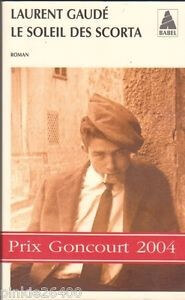
Blood is thicker than water, and in southern Italy in the late 1900's, family blood in the dirt-poor coastal town of Montepuccio was so thick you could walk on it. Carmela, with her three brothers, runs the family business of cigarette smuggling. Their mother, whom they called "the Mute," as did everyone else, died when they were very young. Carmela, when very old, tells most of the story in retrospect to the village priest so he can relate it to her newly-born granddaughter. "I was a sister my whole life long...when people hear of my death no one will say `Manuzio's widow died; they'll say the Scortas' sister died.' "The only happiness I've ever known was when I was surrounded by my brothers." The novel, translated from the French, was a winner of France's Goncourt Prize. The language, the irony, and the tricks of language in this book are beautiful. "Smoke, Don Salvatore, it will do us both good." "You can hardly hear what I'm saying. Don't let it bother you. I prefer it this way." "When I asked for a word with you... you gave a start ... as if a dog had started speaking."
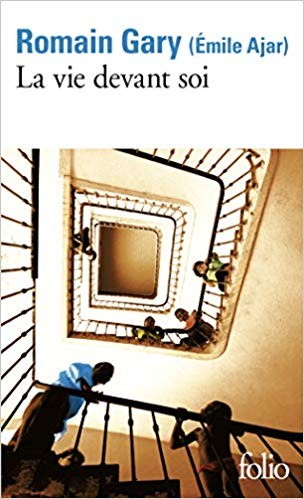
The Life Before Us is the story of an orphaned Arab boy, Momo, and his devotion to Madame Rosa, a dying, 68-year-old, 220-lb. survivor of
Auschwitz and retired "lady of the night."
Momo has been one of the ever-changing ragbag of whores' children at Madame Rosa's boardinghouse in Paris ever since he can remember. But
when the check that pays for his keep no longer arrives and as Madame Rosa becomes too ill to climb the stairs to their apartment, he
determines to support her any way he can.
This sensitive, slightly macabre love story between Momo and Madame Rosa has a supporting cast of transvestites, pimps, and witch doctors
from Paris's immigrant slum, Belleville.
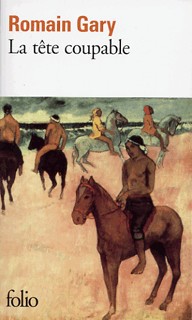
A millimeter less of metaphysical happenings and appearances, more explicit political, social and artistic satirical amusements, and many more playful amatory romps than in its predecessor, The Dance of Genghis Cohn (1968). This time the ""only free soul"" in the world, although still named Cohn and still, as far as repressive hierarchies are concerned, hind-end uppermost, has his own troubles in seeking out the pure life. Certainly Tahiti. Eden home of Gauguin, whose stigmata Cohn earnestly hopes to assume, would seem ideal. Cohn enthusiastically observes the reconstructions of Bizien, ""The Napoleon of Tourism,"" who stages peak moments for the excursion boats--from a lively ""Adam and Eve"" through the ""Passion of Jesus,"" to ""The Death of Captain Cook."" The wastrel Cohn happily exploits the burgeoning guilts of tourists (Americans particularly). He is also pursued by agents of the major powers who think he's a French nuclear scientist (an identity he's quite ready to assume at the last) and he gambols through Gauguin's masterpieces with Meeva--beautiful, bare and submissive. But Meeva turns out to be a university drop-out also bucking for Atlantis. One view of neon shores, bomb testing sites, and the human ant hill--and the two set out for an island ""not on the map."" A massive cerebral joke--cool, clever and go-go-Gauguin.
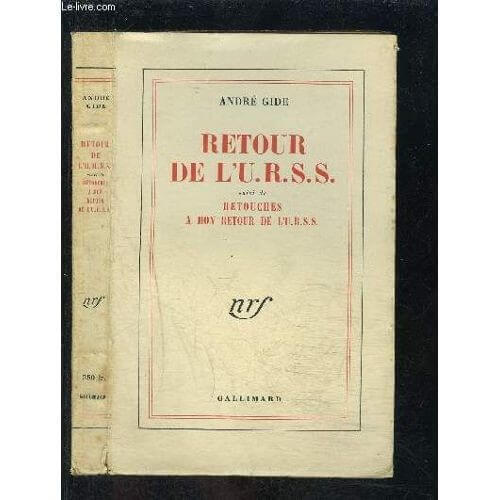
Retouches à mon retour de l'U.R.S.S
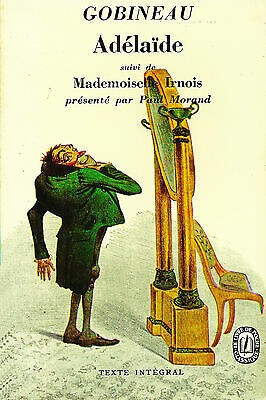
Very good period piece showing life in USSR by one of the original freedom seekers Andre Gide, book concisely points out USSR problems without being overbearing and spiteful literature of some Russian dissidents of later years. Gide took a lot of heat from some of the famous European intellectuals who saw Stalin's USSR as the only alternative to Hitler's Germany. Reading this book I kept thinking that freedom of press in USSR in late 70's early 80's was not much different than what was described in Gide's book written in 1936
A selection of Gautier's tales.
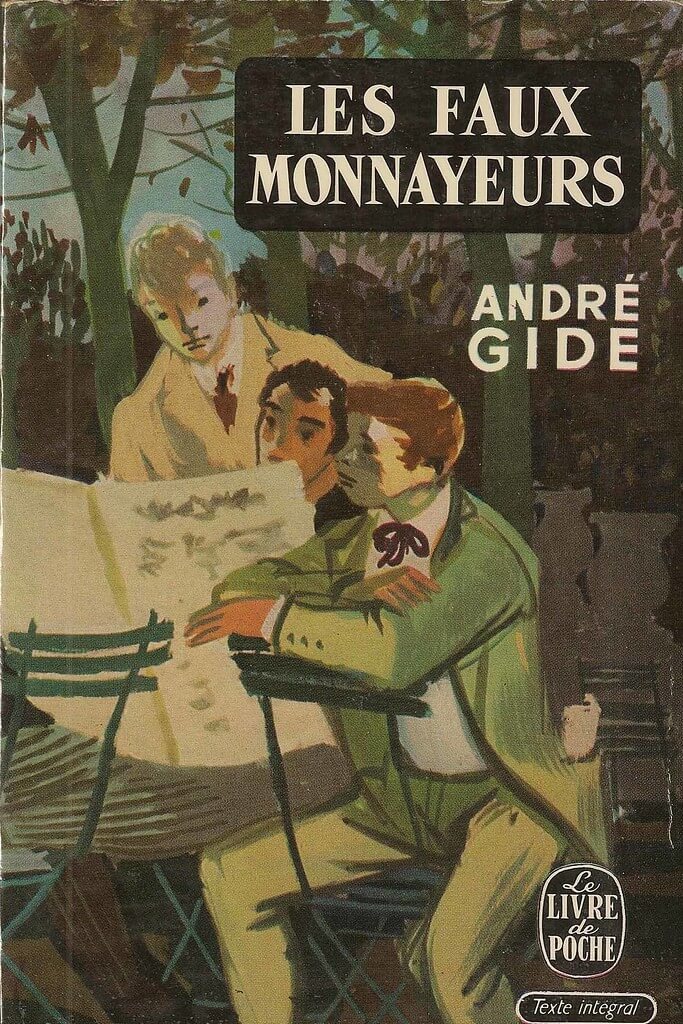
Set in the late 19th century, chiefly in Paris and Rome, this drama involves the alleged abduction of the Pope, a "miraculous" conversion, swindling, adultery, bastardy and murder. The characters are a motley crew of noblemen, saints, adventurers and pickpockets.
With many characters and crisscrossing plot lines, its main theme is that of the original and the copy, and what differentiates them – both in the external plot of the counterfeit gold coins and in the portrayal of the characters' feelings and their relationships. The Counterfeiters is a novel-within-a-novel, with Edouard (the alter ego of Gide) intending to write a book of the same title. Other stylistic devices are also used, such as an omniscient narrator who sometimes addresses the reader directly, weighs in on the characters' motivations or discusses alternate realities. Therefore, the book has been seen as a precursor of the nouveau roman. The structure of the novel was written to mirror "Cubism," in that it interweaves between several different plots and portrays multiple points of view.
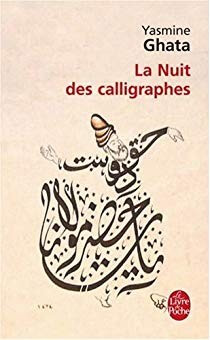
The young Rikkat is being brought up in the belief that her entire life will be devoted to the art of calligraphy. That same year, Atatürk's republic breaks away from the Islamic tradition, progressively abolishing the Arabic language and scripts in favor of a modified version of the Latin alphabet. Once the sacred ministers of Allah, calligraphers are now being marginalized and their schools closed. The resulting suicide of Rikkat's mentor can only reinforce her spite for the new regime and her love for the ancient art she has been taught since her childhood. Inspired by the life of the author's grandmother, The Calligrapher's Night is a breathtaking excursion into the mysteries of life, death, and writing as an art. Yasmine Ghata is the daughter of the famed Lebanese poetess Vénus Khoury-Ghata. The Calligrapher's Night is her first novel.
The Solitude of Compassion, a collection of short stories never before available in English, won popular acclaim when it was originally published in France in 1932. It tells of small-town life in Provence, drawing on a whole village of fictional characters, often warm and decent, at times immoral and coarse. Giono writes of a friendship forged in a battlefield trench in the midst of World War I; an old man’s discovery of the song of the world; and, in the title story, the not-unrelated feelings of compassion and pity. In these twenty stories, Giono reveals his marvelous storytelling through his vivid images and lyrical prose, whether he is conveying the delicate scents of lavender and pine trees or the smells of damp earth and fresh blood.
It is about a pastor who adopts a young blind girl whom his daughter, Charlotte, names "Gertrude". The title refers to Beethoven's Sixth Symphony (also known as the Pastoral Symphony) which the pastor takes Gertrude to hear. It also refers to the pastor's own symphony with Gertrude. His wife, Amélie, resents Gertrude because the pastor dedicates more attention to Gertrude than to their five children. She tries to prompt him to a recognition of the true nature of his feelings for the young woman in his care. Her ability to "see" is contrasted with the "blindness" of the pastor in this regard and the reader is invited to judge him on his intellectual dishonesty. As a religious man, the pastor takes the Bible very seriously and tries to preserve Gertrude's innocence by protecting her from the concept of sin. Because the pastor is really the main character in Gertrude's limited world, she feels herself to be in love with him and to some extent he has similar feelings toward her. When his eldest son Jacques, who is about the same age as Gertrude, asks to marry her, and the pastor becomes jealous and refuses despite the fact that Jacques is obviously in love with her. ...
In The Immoralist , André Gide presents the confessional account of a man seeking the truth of his own nature. The story's protagonist, Michel, knows nothing about love when he marries the gentle Marceline out of duty to his father. On the couple's honeymoon to Tunisia, Michel becomes very ill, and during his recovery he meets a young Arab boy whose radiant health and beauty captivate him. An awakening for him both sexually and morally, Michel discovers a new freedom in seeking to live according to his own desires. But, as he also discovers, freedom can be a burden. A frank defense of homosexuality and a challenge to prevailing ethical concepts, The Immoralist is a literary landmark, marked by Gide's masterful, pure, simple style.
A delicate boy growing up in Paris, Jerome Palissier spends many summers at his uncle's house in the Normandy countryside, where the whole world seems 'steeped in azure'. There he falls deeply in love with his cousin Alissa and she with him. But gradually Alissa becomes convinced that Jerome's love for her is endangering his soul. In the interests of his salvation, she decides to suppress everything that is beautiful in herself - in both mind and body
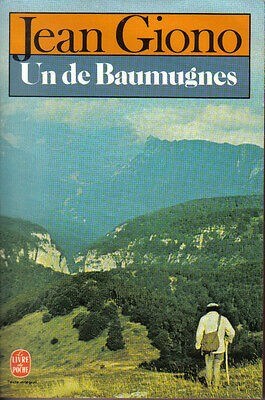
This is a story of a man's seeking trek through a timeless unforgiving French countryside for his son whom he fears has been abducted and killed by a band of rogues. But it gets complicated because a group is looking for his son for marrying a girl against everyone's wishes.
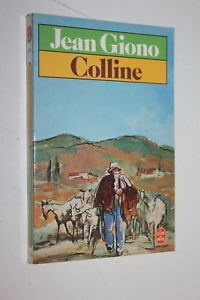
"Hill" is a terse, foul-tempered and mysterious little novel. The bare-bones denizens of a mostly-abandoned French village wonder in horror as first the fountain dries up and then an apocalyptic fire rages. An old man lies on his deathbed spouting Faulknerian horrors and a mysterious cat stalks the villagers bringing forth dreadful catastrophe.
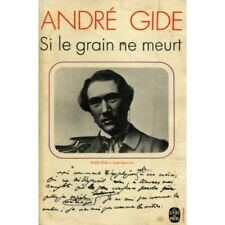
This is the major autobiographical statement from Nobel laureate André Gide. In the events and musings recorded here we find the seeds of
those themes that obsessed him throughout his career and imbued his classic novels The Immoralist and The
Counterfeiters.
Gide
led a life of uncompromising self-scrutiny, and his literary works resembled moments of that life. With If It Die, Gide
determined to relay without sentiment or embellishment the circumstances of his childhood and the birth of his philosophic wanderings, and
in doing so to bring it all to light. Gide’s unapologetic account of his awakening homosexual desire and his portrait of Oscar Wilde and
Lord Alfred Douglas as they indulged in debauchery in North Africa are thrilling in their frankness and alone make If It Die an
essential companion to the work of a twentieth-century literary master.
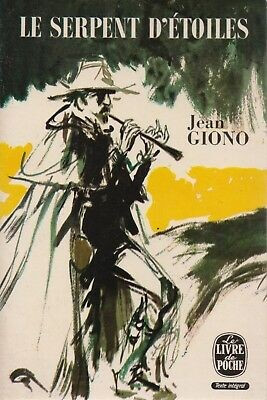
The Serpent of Stars (Le serpent d'étoiles, 1933; reprinted 1999 Grasset) takes place in rural southern France in the early part of the century. The novel’s elusive narrative thread ties landscape to character to an expanse just beyond our grasp. The narrator encounters a shepherding family and glimpse by glimpse, each family member and the shepherding way of life is revealed to us. The novel culminates in a large shepherds’ gathering where a traditional Shepherd’s Play—a kind of creation myth that includes in its cast The River, The Sea, The Man, and The Mountain—is enacted. The work’s proto-environmental world view as well as its hybrid form—part play, part novel—makes The Serpent of Stars astonishingly contemporary. W.S. Merwin’s "Green Fields" begins, "By this part of the century few are left who believe/in the animals for they are not there in the carved parts/of them served on plates and the pleas from slatted trucks..." This novel leaves the reader believing not only in the animals, but the terrain they are part of, the people who tend them, and the life all these elements together compose.
It shows the experiences of two soldiers, in a series of fragmentary episodes. We do not understand the bigger picture, neither did they.
It is graphic, but there is still more left not described for us to imagine.
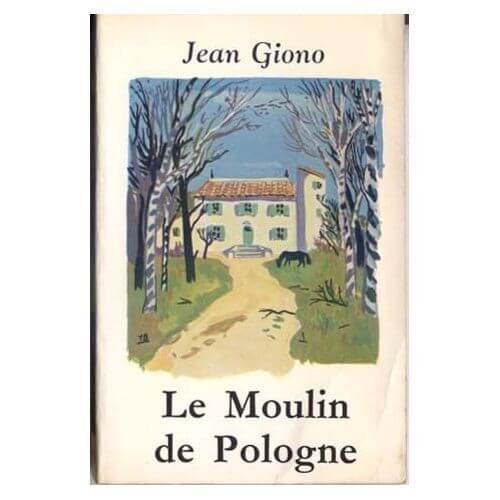
We also get the story of the people and land left at home: a farming area with no young men. The old men and the mothers, wives and
sweethearts struggle with their farms and their loss. The writing is lyrical and sensual, so that you can smell the breeze blowing off the
hills. It makes a dramatic and powerful contrast with the story of the front line. It is sad, but less brutal, and there are a few moments
of hope for the future.
There are also the sheep: a powerful and unforgettable metaphor.
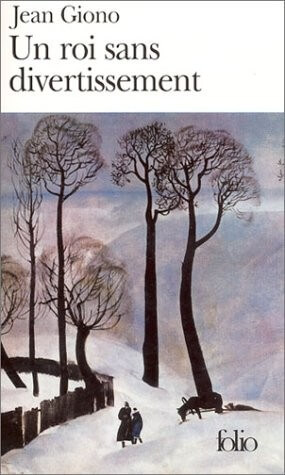
Giono’s novel is an existential detective story set in a snowbound mountain village in the mid-nineteenth century. Deep in winter, inhabitants of the village begin mysteriously to disappear, and Langlois is sent to investigate. A manhunt begins and Langlois brings the case to what appears to be a successful conclusion. Some years later, again in winter, Langlois returns to the village, now having been promoted to the position of captain of the brigade that protects the inhabitants and their property from wolves. Langlois is a charismatic and enigmatic kingly figure who fascinates the villagers he has been sent to protect, and yet he feels set apart from them and from himself, and as he pursues the wolf who is preying on the village, he identifies more and more with the murderer who had been his earlier target.
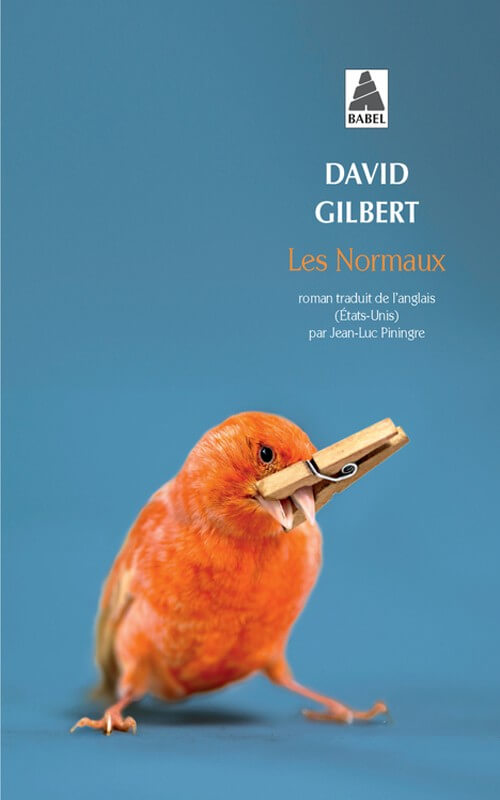
In this critically acclaimed comic masterpiece, David Gilbert tells the story of Billy Schine, a young man who innocently enrolls in a 14-day human drug testing study and finds his normal world turned upside-down. Like a One Flew Over the Cuckoo's Nest for the postmodern age, The Normals is a tour de force from a writer of astonishing intelligence and imagination.
Become a member of Alliance Française Palmerston North for exclusive offers and discounts.